Labor and Employment legislation

Bills on wages, workplace safety, collective bargaining, and unemployment insurance.

12 bills tracked 8 states with activity 10 recent recorded votes

Why this topic is trending

84 changes recorded today · 168 in the last 7 days · 168 in the last 30 days

2026-07-27: 84 events2026-07-28: 84 events

Recent developments

In Congress

All federal bills

S. 2028 In committee

Supporting Apprenticeship Colleges Act of 2025

Supporting Apprenticeship Colleges Act of 2025 This bill directs the Department of Education to award grants to institutions of higher education that sponsor construction and manufacturing-oriented registered apprenticeship…

Last action June 11, 2025 · 412 days in committee

In state legislatures

All state bills

HB 193 Alaska Failed

An Act relating to minimum paid sick leave requirements; establishing a paid parental leave program; relating to employer surcharges; relating to the employment assistance and training program account; relating to unemployment benefits; relating to the collection of child support obligations; relating to employee unemployment tax credits; relating to employer contributions to unemployment; relating to the duties of the Department of Labor and Workforce Development; and providing for an effective date.

Last action July 22, 2026

SB 1747 Missouri In committee

SB 1747 - CYBERCRIME VICTIM PROTECTIONS (SECTION 285.625, 285.630, 285.635, 285.650, 285.670, 455.030, 595.205,595.400, & 595.450) Currently, victims of domestic or sexual violence are afforded workplace protections such as unpaid leave, continuance of medical coverage during unpaid leave, and certain reasonable safety accommodations. This act extends those same protections to victims of cyberharassment, cyberstalking, harassment, and stalking. Further this act protects employees who report certain behaviors from retaliation by their employer. This act establishes the Cybercrimes Survivors' Bill of Rights. These provisions require that an appropriate medical provider, law enforcement officer, and prosecuting attorney shall provide the cybercrimes survivor with notification of the rights of survivors. The Department of Public Safety with the Attorney General shall develop forms and procedures for gathering, transmitting, and storing evidence related to cyberharassment, cyberstalking, harassment, and stalking offenses. The Department of Public Safety shall develop a document in collaboration with Missouri-based stakeholders and shall provide this document in clear language that is comprehensible to a person proficient in English and shall provide this document in any other foreign language spoken by at least five percent of the population in any county or city not within a county in Missouri. The Elder Abuse Task Force is established within this act. This fourteen member task force shall appoint a chairperson who is elected by a majority vote of the members of the task force. Under this act, the task force shall examine and make recommendations on romance scams, educational resources deemed necessary by the task force to educate and inform victims and the public on ways to protect themselves, measures necessary to address and reduce elder abuse, and measures to help victims and victims' families prevent and heal from elder abuse. Under this act, the Missouri Supreme Court shall develop guidelines for the redaction of personal identifying information in court documents. NO-CALL LIST (SECTION 407.1095, 407.1098, 407.1101, & 407.1104) This act adds definitions for "business subscriber", "call spoofing", "seller" and "telemarketer" to this chapter. Under current law a natural person responding to a referral, or person setting or attempting to set an appointment for actions related to their licensed trade is an exception to the "telephone solicitation" definition for the purposes of the state no-call list. This act removes that exception. Under this act business subscribers are eligible to be placed on the state's no-call list. Currently the Attorney General can determine the length of time that an individual remains on the no-call list before having to send another notice. This act allows a person to remain on the no-call list indefinitely. CALLER ID ANTI-SPOOFING (SECTION 407.1115) The act establishes the "Caller ID Anti-Spoofing Act", which requires telecommunications providers to block certain calls consistent with Federal law. A provider is considered in compliance with these requirements if the provider has filed a certification with the Federal Communications Commission that the provider's traffic meets certain requirements detailed in the act. No later than August 28, 2027, providers must implement a Secure Telephone Identity Revisited (STIR) and Signature-based Handling of Asserted Information Using toKENs (SHAKEN) authentication protocol or an alternative technology that provides comparable or superior capability to verify and authenticate certain caller identification information. Any provider that knowingly fails or neglects to comply with these requirements is subject to fines of $25,000 for the first offense, $50,000 for the second offense, and $75,000 for the third and any subsequent offense. It is a violation of these provisions if a caller enters false information or places a call knowing false information was entered into a caller identification service with the intent to deceive, defraud, or mislead the recipient of the call. Certain calls are exempt from these requirements as specified in the act. The recipient of any call in which the caller uses false caller identification information will have standing to recover punitive damages against the caller in an amount up to $5,000 per call. Call recipients can bring action under this provision as members of a class. The Attorney General can initiate legal proceedings or intervene in legal proceedings on behalf of call recipients. This provision is identical to HB 2472 (2026). FIREARM RESTRICTIONS (SECTION 455.050, 455.523, 565.076, 565.227, & 571.070) This act provides that after a hearing for any full order of protection in which an order of protection is granted, the court may also prohibit the respondent from knowingly possessing or purchasing any firearm while the order is in effect, and inform the respondent either in writing or orally of such prohibition. If the respondent is prohibited from possessing or purchasing firearms, the court shall forward the order to the State Highway Patrol for enforcement. This act provides that upon conviction for the offenses of domestic assault in the fourth degree and stalking in the second degree, the court shall forward the record of conviction to the State Highway Patrol. The State Highway Patrol shall update the respondent's record in the National Instant Criminal Background Check System and also notify the Federal Bureau of Investigation within 24 hours. This act provides that a person commits the offense of unlawful possession of a firearm if the person knowingly possesses a firearm and has been convicted of a domestic violence offense in Missouri or any other state or is subject to an order of protection prohibiting the possession or purchase of a firearm that was issued after a hearing in which the person had actual notice and had the opportunity to participate in such hearing. These provisions are identical to provisions in SB 328 (2025), similar to provisions in SB 91 (2025) and HB 904 (2025), identical to provisions in SB 913 (2024), SB 431 (2023), SB 59 (2023), and SB 305 (2023), and substantially similar to provisions in SB 894 (2022), HB 1655 (2022), SB 144 (2021), and HB 2131 (2020). OFFENSES (SECTION 27.117, 565.076, 565.090, 565.091, 565.227, 565.260, 565.400, 565.405, 573.570, & 573.575) This act allows the Attorney General to prosecute certain offenses that occurred in more than one jurisdiction. Currently, the offense of domestic assault in the fourth degree is a class A misdemeanor, unless it is a second or subsequent offense in which case it will be a class E felony. This act makes the offense a class E felony for a first offense and a class D felony for a second or subsequent offense. Under current law a first offense of harassment in the first degree is a class E felony. This act provides that a second or subsequent conviction of harassment in the first degree shall be a class D felony where the individual has previously been found guilty of harassment in the first or second degree. In current statute a first offense of harassment in the second degree is a class A misdemeanor. Under this act a second or subsequent conviction of harassment in the second degree are modified to include a conviction of harassment in the first degree as a previous conviction and it is a class E felony. Currently, the offense of stalking in the second degree is a class A misdemeanor, unless it is a second or subsequent offense in which case it shall be a class E felony. This act provides that the first offense shall be a class E felony, and a second or subsequent offense shall be a class D felony. This act creates the offense of unlawful tracking of a motor vehicle. A person is guilty of this offense if he or she knowingly installs, conceals, or otherwise places an electronic tracking device in or on a motor vehicle. This offense shall be a class A misdemeanor for a first offense and a class E felony for a second or subsequent offense. This act creates the offense of cyberharassment. A person commits this offense if he or she purposely or knowingly engages in a threatening, aggressive, or otherwise fear-inducing, course of conduct by using digital technology, internet service providers, electronic service providers or other electronic communications and devices cause reasonable fear, alarm, anxiety, undo stress, or terror to others by repeated contact with no legitimate purpose. This act shall be a class B misdemeanor upon a first offense and a class A misdemeanor for second or subsequent offenses. A person commits the offense of cyberstalking if such person purposely or knowingly engages in a threatening, aggressive, or otherwise fear-inducing, course of conduct by using digital technology, internet service providers, electronic service providers or other electronic communications and devices to enhance the ability to intimidate, track, follow or cause reasonable fear, alarm, anxiety, undo stress, or terror to another person. A first offense shall be a class A misdemeanor and a second or subsequent offense shall be a class E felony. This act creates the offense of disclosure of an intimate digital depiction. A person shall be guilty of such offense if he or she discloses or threatens to disclose an intimate digital depiction with the intent to harass or threaten another person. A violation of such offense is a class D felony if the person discloses an intimate digital depiction and a class E felony if the person threatens to disclose an intimate digital depiction. Any second or subsequent violation of disclosure of an intimate digital depiction is a class C felony. It shall be a class D felony for a second or subsequent conviction of threatening to disclose an intimate digital depiction. Additionally, it shall be a class C felony if the disclosure interferes with a government proceeding or causes violence. This act creates the offense of sadistic online exploitation. A person commits this offense where he or she uses the internet to coerce a victim into committing certain acts. This offense shall be a class E felony, except if bodily harm or injury occurs, in which case it shall be a class D felony. ADDRESS CONFIDENTIALITY PROGRAM (SECTION 589.660 & 589.663) The list of individuals protected by the address confidentiality program is amending by adding victims of cyberstalking, harassment and cyberharassment. PEACE OFFICER TRAINING (SECTION 590.040) Under this act, every peace officer licensed after August 28, 2027, must receive as part of their basic training four hours of training specific to cyberstalking, harassment and cyberharassment. The training shall also include the legal rights and remedies available to victims, including the civil and criminal remedies, and resources and services available to victims. TRISTAN BENSON, JR.

SB 1747 - CYBERCRIME VICTIM PROTECTIONS (SECTION 285.625, 285.630, 285.635, 285.650, 285.670, 455.030, 595.205,595.400, & 595.450) Currently, victims of domestic or sexual violence are afforded workplace protections such…

Last action May 7, 2026

SB 1300 Florida Vetoed

Education and Workforce Development for Current and Former Inmates

Education and Workforce Development for Current and Former Inmates; Authorizing the Department of Transportation to expend certain funds for all workforce development programs, rather than only construction workforce…

Last action March 9, 2026

SB 2504 Florida Awaiting a floor vote

State Employees

State Employees; Providing for the resolution of collective bargaining issues at impasse between the state and certified bargaining units for state employees, etc.

Last action February 20, 2026

SB 1610 Missouri In committee

SB 1610 - This act creates the Liaison for Postsecondary Education for Homeless Pupils within the Department of Higher Education and Workforce Development, along with a corresponding fund in the state treasury, for purposes of providing support for homeless pupils. The act defines "homeless pupil" as any person who satisfies the definition of "homeless children and youths" or "unaccompanied youth" under federal law. The Governor shall, to the extent that money is available for the purpose, appoint the Liaison for a term of four years. The individual appointed shall be knowledgeable in the various issues relating to homeless and unaccompanied pupils, including the federal McKinney-Vento Homeless Assistance Act; shall have no pecuniary interest in any entity providing services to homeless pupils; shall not pursue any other business or vocation; and shall not be a member of any political party. The Governor may remove the Liaison from office for inefficiency, neglect of duty, or malfeasance in office. The act outlines the Liaison's duties, which include conducting an annual analysis of homeless pupils to assess their needs; developing a database to monitor trends in the graduation and retention of homeless pupils; developing a model for college and career readiness for homeless pupils; collaborating with high schools to support homeless pupils who have been admitted to an institution of higher education in this state; collaborating with financial aid offices, student support services, and campus housing services of institutions of higher education; identifying and referring homeless pupils to mentoring programs; increasing awareness among staff members of institutions of higher education in Missouri who work with homeless pupils; maintaining a database of food banks, clothing banks, and low-cost health care providers; establishing one or more food banks or clothing banks on a campus of an institution of higher education within this state; establishing a plan for housing homeless pupils when campus housing is not available; and applying for and accepting grants awarded under federal law relating to reducing college costs for unaccompanied pupils. The Liaison may employ staff, purchase equipment, lease office space, and perform other necessary functions, as provided in the act. This act is similar to HB 3373 (2026). OLIVIA SHANNON

SB 1610 - This act creates the Liaison for Postsecondary Education for Homeless Pupils within the Department of Higher Education and Workforce Development, along with a corresponding fund…

Last action February 12, 2026 · 166 days in committee

Recent votes on this topic

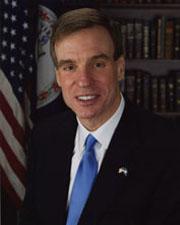
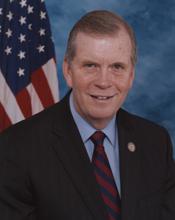
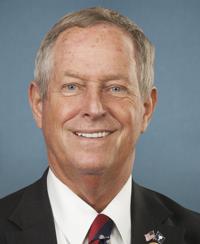
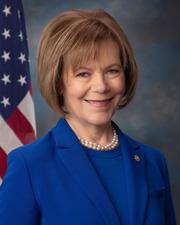
Most active sponsors

Legislators who have sponsored the most bills tagged Labor and Employment in the current session. Sponsorship count describes activity, not position.
States with activity

All states

Background reading

All explainers