Missouri

Bills moving through the Missouri Legislature, plus how the state's congressional delegation voted in Washington.

20 active state bills 10 members of Congress 3 state legislators tracked

Recent Missouri bills

All state bills

SB 856 Awaiting a floor vote

SB 856 - This act modifies provisions relating to the circuit court of Cole County, including its appellate district and venue for certain cases. APPELLATE DISTRICT FOR COLE COUNTY (SECTION 477.050) This act provides that Cole County shall be within the territorial jurisdiction of the Eastern District of the Missouri Court of Appeals, rather than within the Western District. This provision is identical to a provision in HB 3054 (2026) and in SCS/HCS/HB 1259 (2025). VENUE FOR CONSTITUTIONAL CASES (SECTION 508.010) This act provides that in all actions in which there is any count alleging a procedural defect in the enactment of a bill into law or the validity of a provision of the Missouri Constitution, a Missouri statute, or a Missouri regulation, the venue shall be in Cole County. This provision is identical to a provision in HB 3054 (2026). KATIE O'BRIEN

SB 856 - This act modifies provisions relating to the circuit court of Cole County, including its appellate district and venue for certain cases. APPELLATE DISTRICT FOR COLE…

Last action May 15, 2026

SB 1747 In committee

SB 1747 - CYBERCRIME VICTIM PROTECTIONS (SECTION 285.625, 285.630, 285.635, 285.650, 285.670, 455.030, 595.205,595.400, & 595.450) Currently, victims of domestic or sexual violence are afforded workplace protections such as unpaid leave, continuance of medical coverage during unpaid leave, and certain reasonable safety accommodations. This act extends those same protections to victims of cyberharassment, cyberstalking, harassment, and stalking. Further this act protects employees who report certain behaviors from retaliation by their employer. This act establishes the Cybercrimes Survivors' Bill of Rights. These provisions require that an appropriate medical provider, law enforcement officer, and prosecuting attorney shall provide the cybercrimes survivor with notification of the rights of survivors. The Department of Public Safety with the Attorney General shall develop forms and procedures for gathering, transmitting, and storing evidence related to cyberharassment, cyberstalking, harassment, and stalking offenses. The Department of Public Safety shall develop a document in collaboration with Missouri-based stakeholders and shall provide this document in clear language that is comprehensible to a person proficient in English and shall provide this document in any other foreign language spoken by at least five percent of the population in any county or city not within a county in Missouri. The Elder Abuse Task Force is established within this act. This fourteen member task force shall appoint a chairperson who is elected by a majority vote of the members of the task force. Under this act, the task force shall examine and make recommendations on romance scams, educational resources deemed necessary by the task force to educate and inform victims and the public on ways to protect themselves, measures necessary to address and reduce elder abuse, and measures to help victims and victims' families prevent and heal from elder abuse. Under this act, the Missouri Supreme Court shall develop guidelines for the redaction of personal identifying information in court documents. NO-CALL LIST (SECTION 407.1095, 407.1098, 407.1101, & 407.1104) This act adds definitions for "business subscriber", "call spoofing", "seller" and "telemarketer" to this chapter. Under current law a natural person responding to a referral, or person setting or attempting to set an appointment for actions related to their licensed trade is an exception to the "telephone solicitation" definition for the purposes of the state no-call list. This act removes that exception. Under this act business subscribers are eligible to be placed on the state's no-call list. Currently the Attorney General can determine the length of time that an individual remains on the no-call list before having to send another notice. This act allows a person to remain on the no-call list indefinitely. CALLER ID ANTI-SPOOFING (SECTION 407.1115) The act establishes the "Caller ID Anti-Spoofing Act", which requires telecommunications providers to block certain calls consistent with Federal law. A provider is considered in compliance with these requirements if the provider has filed a certification with the Federal Communications Commission that the provider's traffic meets certain requirements detailed in the act. No later than August 28, 2027, providers must implement a Secure Telephone Identity Revisited (STIR) and Signature-based Handling of Asserted Information Using toKENs (SHAKEN) authentication protocol or an alternative technology that provides comparable or superior capability to verify and authenticate certain caller identification information. Any provider that knowingly fails or neglects to comply with these requirements is subject to fines of $25,000 for the first offense, $50,000 for the second offense, and $75,000 for the third and any subsequent offense. It is a violation of these provisions if a caller enters false information or places a call knowing false information was entered into a caller identification service with the intent to deceive, defraud, or mislead the recipient of the call. Certain calls are exempt from these requirements as specified in the act. The recipient of any call in which the caller uses false caller identification information will have standing to recover punitive damages against the caller in an amount up to $5,000 per call. Call recipients can bring action under this provision as members of a class. The Attorney General can initiate legal proceedings or intervene in legal proceedings on behalf of call recipients. This provision is identical to HB 2472 (2026). FIREARM RESTRICTIONS (SECTION 455.050, 455.523, 565.076, 565.227, & 571.070) This act provides that after a hearing for any full order of protection in which an order of protection is granted, the court may also prohibit the respondent from knowingly possessing or purchasing any firearm while the order is in effect, and inform the respondent either in writing or orally of such prohibition. If the respondent is prohibited from possessing or purchasing firearms, the court shall forward the order to the State Highway Patrol for enforcement. This act provides that upon conviction for the offenses of domestic assault in the fourth degree and stalking in the second degree, the court shall forward the record of conviction to the State Highway Patrol. The State Highway Patrol shall update the respondent's record in the National Instant Criminal Background Check System and also notify the Federal Bureau of Investigation within 24 hours. This act provides that a person commits the offense of unlawful possession of a firearm if the person knowingly possesses a firearm and has been convicted of a domestic violence offense in Missouri or any other state or is subject to an order of protection prohibiting the possession or purchase of a firearm that was issued after a hearing in which the person had actual notice and had the opportunity to participate in such hearing. These provisions are identical to provisions in SB 328 (2025), similar to provisions in SB 91 (2025) and HB 904 (2025), identical to provisions in SB 913 (2024), SB 431 (2023), SB 59 (2023), and SB 305 (2023), and substantially similar to provisions in SB 894 (2022), HB 1655 (2022), SB 144 (2021), and HB 2131 (2020). OFFENSES (SECTION 27.117, 565.076, 565.090, 565.091, 565.227, 565.260, 565.400, 565.405, 573.570, & 573.575) This act allows the Attorney General to prosecute certain offenses that occurred in more than one jurisdiction. Currently, the offense of domestic assault in the fourth degree is a class A misdemeanor, unless it is a second or subsequent offense in which case it will be a class E felony. This act makes the offense a class E felony for a first offense and a class D felony for a second or subsequent offense. Under current law a first offense of harassment in the first degree is a class E felony. This act provides that a second or subsequent conviction of harassment in the first degree shall be a class D felony where the individual has previously been found guilty of harassment in the first or second degree. In current statute a first offense of harassment in the second degree is a class A misdemeanor. Under this act a second or subsequent conviction of harassment in the second degree are modified to include a conviction of harassment in the first degree as a previous conviction and it is a class E felony. Currently, the offense of stalking in the second degree is a class A misdemeanor, unless it is a second or subsequent offense in which case it shall be a class E felony. This act provides that the first offense shall be a class E felony, and a second or subsequent offense shall be a class D felony. This act creates the offense of unlawful tracking of a motor vehicle. A person is guilty of this offense if he or she knowingly installs, conceals, or otherwise places an electronic tracking device in or on a motor vehicle. This offense shall be a class A misdemeanor for a first offense and a class E felony for a second or subsequent offense. This act creates the offense of cyberharassment. A person commits this offense if he or she purposely or knowingly engages in a threatening, aggressive, or otherwise fear-inducing, course of conduct by using digital technology, internet service providers, electronic service providers or other electronic communications and devices cause reasonable fear, alarm, anxiety, undo stress, or terror to others by repeated contact with no legitimate purpose. This act shall be a class B misdemeanor upon a first offense and a class A misdemeanor for second or subsequent offenses. A person commits the offense of cyberstalking if such person purposely or knowingly engages in a threatening, aggressive, or otherwise fear-inducing, course of conduct by using digital technology, internet service providers, electronic service providers or other electronic communications and devices to enhance the ability to intimidate, track, follow or cause reasonable fear, alarm, anxiety, undo stress, or terror to another person. A first offense shall be a class A misdemeanor and a second or subsequent offense shall be a class E felony. This act creates the offense of disclosure of an intimate digital depiction. A person shall be guilty of such offense if he or she discloses or threatens to disclose an intimate digital depiction with the intent to harass or threaten another person. A violation of such offense is a class D felony if the person discloses an intimate digital depiction and a class E felony if the person threatens to disclose an intimate digital depiction. Any second or subsequent violation of disclosure of an intimate digital depiction is a class C felony. It shall be a class D felony for a second or subsequent conviction of threatening to disclose an intimate digital depiction. Additionally, it shall be a class C felony if the disclosure interferes with a government proceeding or causes violence. This act creates the offense of sadistic online exploitation. A person commits this offense where he or she uses the internet to coerce a victim into committing certain acts. This offense shall be a class E felony, except if bodily harm or injury occurs, in which case it shall be a class D felony. ADDRESS CONFIDENTIALITY PROGRAM (SECTION 589.660 & 589.663) The list of individuals protected by the address confidentiality program is amending by adding victims of cyberstalking, harassment and cyberharassment. PEACE OFFICER TRAINING (SECTION 590.040) Under this act, every peace officer licensed after August 28, 2027, must receive as part of their basic training four hours of training specific to cyberstalking, harassment and cyberharassment. The training shall also include the legal rights and remedies available to victims, including the civil and criminal remedies, and resources and services available to victims. TRISTAN BENSON, JR.

SB 1747 - CYBERCRIME VICTIM PROTECTIONS (SECTION 285.625, 285.630, 285.635, 285.650, 285.670, 455.030, 595.205,595.400, & 595.450) Currently, victims of domestic or sexual violence are afforded workplace protections such…

Last action May 7, 2026

SB 1263 In committee

SB 1263 - This act establishes "Colton's Law." Under this act, MO HealthNet and private health insurance carriers and health benefit plans for plans delivered, issued for delivery, continued, or renewed on or after January 1, 2027, shall provide coverage for medically necessary physician-prescribed treatment for pediatric autoimmune neuropsychiatric disorders associated with streptococcal infections (PANDAS) and pediatric acute-onset neuropsychiatric syndrome (PANS). Coverage shall include antibiotics, medications, behavioral therapies, immunomodulating medicines, plasma exchange, and intravenous immunoglobulin therapy, to the extent described in the act and subject to no greater copayments, coinsurance, or deductibles than similar benefits provided by the health carrier or benefit plan. SARAH HASKINS

SB 1263 - This act establishes "Colton's Law." Under this act, MO HealthNet and private health insurance carriers and health benefit plans for plans delivered, issued for delivery,…

Last action March 31, 2026 · 118 days in committee

SB 1286 Awaiting a floor vote

SCS/SB 1286 - This act provides that a political subdivision shall approve or deny a request for a permit or any other kind of prior approval required for the construction of new single-family residential buildings within sixty calendar days of the request. If a response is not received by the applicant within sixty days, the request shall be deemed approved. If the request is approved, the political subdivision shall not impose any additional requirements related to such request. If the request is denied, the political subdivision shall state the reasons for denial, as described in the act. This act is similar to SB 912 (2026), HB 2291 (2026), SCS/HCS/HB 2384 (2026), and HCS/HB 1264 (2025). TRISTAN BENSON, JR.

SCS/SB 1286 - This act provides that a political subdivision shall approve or deny a request for a permit or any other kind of prior approval required for…

Last action March 30, 2026

SB 927 Awaiting a floor vote

SCS/SB 927 - This act prohibits the preparation, distribution, advertisement, sale, or offering for sale of a kratom product that: (1) is adulterated; (2) is sold to a person under 21 years of age; (3) contains 7-hydroxymitragynine concentrated at a level above eight hundred parts per million on a dry-weight basis; (4) mimics candy or is appealing to children; or (5) is combustible or intended for vaporization. Kratom products shall contain specified labels that include disclaimers. A person who violates this provision will be deemed to have engaged in an unlawful practice in violation of the state's Merchandising Practices Act. Additionally, it shall be an infraction for a person to sell a kratom product to a person under 21 years of age, as described in the act. SARAH HASKINS

SCS/SB 927 - This act prohibits the preparation, distribution, advertisement, sale, or offering for sale of a kratom product that: (1) is adulterated; (2) is sold to a…

Last action March 4, 2026

SB 1063 In committee

SB 1063 - Current law authorizes an income tax deduction for retirement benefits received by a taxpayer as a result of service in the Armed Forces of the United States. This act also allows for the deduction of any survivor benefits derived from such service. This act is identical to a provision in SS/SCS/SB 974 (2026) and SS/SB 59 (2025), and is similar to a provision in HCS/SB 994 (2026). JOSH NORBERG

SB 1063 - Current law authorizes an income tax deduction for retirement benefits received by a taxpayer as a result of service in the Armed Forces of the…

Last action February 24, 2026 · 153 days in committee

SB 1614 In committee

SB 1614 - This act creates the Missouri Earned Family and Medical Leave Act. GENERALLY Under this act, all employees who are not independent contractors are eligible to receive up to six weeks each year of wage replacement benefits for any of the following reasons: • To bond with a minor child within the first year of birth or placement in connection with foster care or adoption; • To care for a family member with a serious health condition; • To tend to one's own serious health condition; or • To assume any familial responsibility because a spouse, child, or parent of an employee is on, or has been notified of an impending call to, active duty in the armed forces. The Department of Labor and Industrial Relations is responsible for administering the program. An employee is eligible for benefits equal to 100% of his or her average weekly pay for each full week taken for family or medical leave. However, an employee's average weekly wage may not be higher than the average state weekly wage. An employee may take partial weeks of leave but will only receive benefits equal to the fraction of the number of days of leave taken divided by the number of the days that the employee would have otherwise worked. An employee may additionally only take leave in full day increments. APPLYING FOR BENEFITS An employee has 41 days following the first day on which he or she begins to take family or medical leave to file a claim for benefits with the Department. Furthermore, an employee may not receive benefits until they have contributed to the Missouri Earned Family and Medical Leave Fund for at least 52 weeks. An employee may not receive benefits on any day for which they are eligible to receive unemployment or workers' compensation benefits. Leave taken under this act must be taken concurrently with leave taken under the federal Family Medical Leave Act. Each employee applying for benefits shall show, on a certificate provided by the Department, that he or she is entitled to family or medical leave. An employee seeking to take leave under this act shall provide at least 30 days notice to their employer if the reason for leave is foreseeable. If it is not practicable, notice shall be given as soon as practicable. APPEALING DETERMINATION OF ELIGIBILITY Employees are entitled to appeal a determination of eligibility by the Department to the Administrative Hearing Commission. A notice of appeal shall be sent to the Commission within 30 days of the receipt of the determination by the employee. A decision by the Commission may be appealed to a court of competent jurisdiction. An employee is not entitled to appeal a determination of the amount of benefits received but may request a redetermination by the Department within one year of the initial determination. UNLAWFUL DISCRIMINATORY ACTIONS It is unlawful for an employer to discriminate against an employee because he or she filed a claim for, indicated an intent to file a claim for, or has received Missouri earned family and medical leave benefits. Courts hearing such complaints may grant injunctive, equitable, or compensatory relief to employees. Complaints may be filed by either the employee or the Department. In the event that the Department files a complaint, the employee is thereafter barred from bringing his or her own action. In any event, a discrimination claim shall be brought within three years. OUTREACH AND REPORTS The Department is required to develop and implement an outreach program to make employees aware of their rights, duties, and responsibilities under this act. The State Auditor is required to complete an audit of the program by January 1, 2033. MISSOURI EARNED FAMILY AND MEDICAL LEAVE FUND The Missouri Earned Family and Medical Leave Fund is created. An employee is required to contribute .025% of his or her average weekly pay to the fund, provided that the total wages used to compute the contribution rate shall not exceed the contribution and benefit base used to calculate Social Security taxes. If, at the discretion of the Director of the Department of Labor and Industrial Relations, there is not a sufficient amount of funds in the fund to satisfy all claims, the director is permitted to reduce the benefit amount each employee will receive. Contributions to the program may begin January 1, 2028, but no employee may receive benefits until January 1, 2030. All employee contributions are pre-tax and not considered part of the adjusted gross income. REFERENDUM CLAUSE The act contains a referendum clause to be presented to the voters at the 2026 general election. This act is identical to SB 1069 (2024) and substantially similar to HB 3226 (2026), SB 751 (2025), HB 2597 (2024), SB 548 (2023), HB 1126 (2023), SB 729 (2022), HB 2222 (2022), HB 2822 (2022), SB 416 (2021), HB 1372 (2021), SB 565 (2020), HB 2542 (2020), SB 162 (2019), SB 607 (2018), HB 1956 (2018), SB 69 (2017), HB 659 (2017), SCS/SB 291 (2017), HB 1059 (2017), and SB 1049 (2016), and similar in concept to SB 945 (2024), HB 2505 (2024), SB 193 (2023), HB 1255 (2023), SB 54 (2017), SB 983 (2016), and HB 1161 (2015). SCOTT SVAGERA

SB 1614 - This act creates the Missouri Earned Family and Medical Leave Act. GENERALLY Under this act, all employees who are not independent contractors are eligible to…

Last action February 12, 2026 · 165 days in committee

SB 1610 In committee

SB 1610 - This act creates the Liaison for Postsecondary Education for Homeless Pupils within the Department of Higher Education and Workforce Development, along with a corresponding fund in the state treasury, for purposes of providing support for homeless pupils. The act defines "homeless pupil" as any person who satisfies the definition of "homeless children and youths" or "unaccompanied youth" under federal law. The Governor shall, to the extent that money is available for the purpose, appoint the Liaison for a term of four years. The individual appointed shall be knowledgeable in the various issues relating to homeless and unaccompanied pupils, including the federal McKinney-Vento Homeless Assistance Act; shall have no pecuniary interest in any entity providing services to homeless pupils; shall not pursue any other business or vocation; and shall not be a member of any political party. The Governor may remove the Liaison from office for inefficiency, neglect of duty, or malfeasance in office. The act outlines the Liaison's duties, which include conducting an annual analysis of homeless pupils to assess their needs; developing a database to monitor trends in the graduation and retention of homeless pupils; developing a model for college and career readiness for homeless pupils; collaborating with high schools to support homeless pupils who have been admitted to an institution of higher education in this state; collaborating with financial aid offices, student support services, and campus housing services of institutions of higher education; identifying and referring homeless pupils to mentoring programs; increasing awareness among staff members of institutions of higher education in Missouri who work with homeless pupils; maintaining a database of food banks, clothing banks, and low-cost health care providers; establishing one or more food banks or clothing banks on a campus of an institution of higher education within this state; establishing a plan for housing homeless pupils when campus housing is not available; and applying for and accepting grants awarded under federal law relating to reducing college costs for unaccompanied pupils. The Liaison may employ staff, purchase equipment, lease office space, and perform other necessary functions, as provided in the act. This act is similar to HB 3373 (2026). OLIVIA SHANNON

SB 1610 - This act creates the Liaison for Postsecondary Education for Homeless Pupils within the Department of Higher Education and Workforce Development, along with a corresponding fund…

Last action February 12, 2026 · 165 days in committee

SJR 110 In committee

SJR 110 - Under current law, in every criminal case a defendant may, with the assent of the court, waive a trial by jury. This proposed constitutional amendment, if approved by the voters, adds that a defendant may waive a trial by jury if he or she receives assent by both the government and the court. This act is identical to SJR 15 (2025), SJR 67 (2024), SJR 24 (2023), SJR 44 (2022), and SJR 22 (2021). TRISTAN BENSON, JR.

SJR 110 - Under current law, in every criminal case a defendant may, with the assent of the court, waive a trial by jury. This proposed constitutional amendment,…

Last action February 5, 2026 · 172 days in committee

SB 1346 In committee

SB 1346 - The act creates provisions relating to age verification on adult websites. Under the act, a commercial entity that publishes or distributes material on its website, including a social media platform, more than 1/3 of which is sexual material harmful to minors, as defined in the act, shall use reasonable age verification methods to verify that an individual attempting to access the material is 18 years of age or older. A commercial entity or a third party that performs age verification shall not retain any identifying information of the individual. A commercial entity that is required to perform age verification under the act shall post certain notices on its website, as described in the act. The act shall not apply to bona fide news or public interest broadcasts or other media and shall not affect the rights of a news-gathering organization. An internet service provider or subsidiary, search engine, or cloud service shall not be held liable for violating provisions of the act solely for providing internet access to any content not under the provider’s control. The Attorney General shall enforce provisions of the act. If the Attorney General believes that a violation occurred and an action is in the public interest, the Attorney General may commence an action. If the court finds that a violation occurred, the court may grant relief, as described in the act. The act is identical to SB 901 (2026), SB 1412 (2026), and similar to HCS/HBs 1839, 2921 & 3015 (2026). JULIA SHEVELEVA

SB 1346 - The act creates provisions relating to age verification on adult websites. Under the act, a commercial entity that publishes or distributes material on its website,…

Last action January 27, 2026 · 181 days in committee

SB 1287 In committee

SB 1287 - Current law authorizes a taxpayer to deduct a maximum of the first $6,000 of any retirement allowance received from any privately funded sources if the taxpayer's Missouri adjusted gross income is less than $25,000 if filing single, $32,000 if filing married combined, or $16,000 if filing married separately. For all tax years beginning on or after January 1, 2027, this act increases such deduction to $12,000 and increases the income thresholds to $50,000, $64,000, and $32,600, respectively. This act is identical to HCS/HBs 1762 & 2059 (2026), SB 620 (2025), HB 44 (2025), and HB 2657 (2024), and to a provision in HCS/SS/SB 898 (2024), and is substantially similar to HB 2205 (2026), HB 1423 (2024), SB 241 (2023), SB 448 (2023), SB 585 (2023), HB 156 (2023), HB 456 (2023), HB 662 (2023), HB 1206 (2023), SB 871 (2022), HB 2853 (2022), SB 157 (2021), SB 847 (2020), and HB 1725 (2020), and to provisions in HCS/SS#3/SCS/SB 131 (2023), SS/SB 190 (2023), HCS/SB 247 (2023), HS/HCS/HB 356 (2023), and SCS/HCS#2/HB 713 (2023). JOSH NORBERG

SB 1287 - Current law authorizes a taxpayer to deduct a maximum of the first $6,000 of any retirement allowance received from any privately funded sources if the…

Last action January 27, 2026 · 181 days in committee

Congressional delegation

U.S. Senate

U.S. House

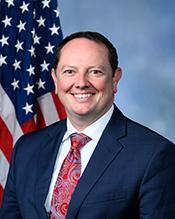
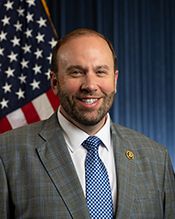
Mark Alford

U.S. Representative, Missouri District 4 (R)

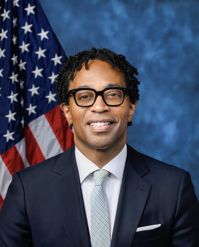
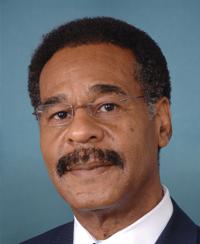
Wesley Bell

U.S. Representative, Missouri District 1 (D)

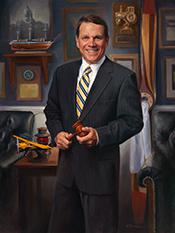
Sam Graves

U.S. Representative, Missouri District 6 (R)

Jason Smith

U.S. Representative, Missouri District 8 (R)

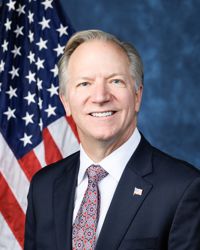
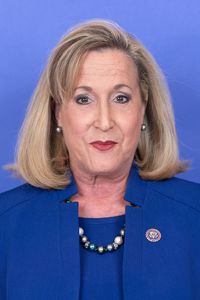
Ann Wagner

U.S. Representative, Missouri District 2 (R)

State legislature

Full roster

Recent votes

Most active topics in Missouri

State page rebuilt July 27, 2026.